
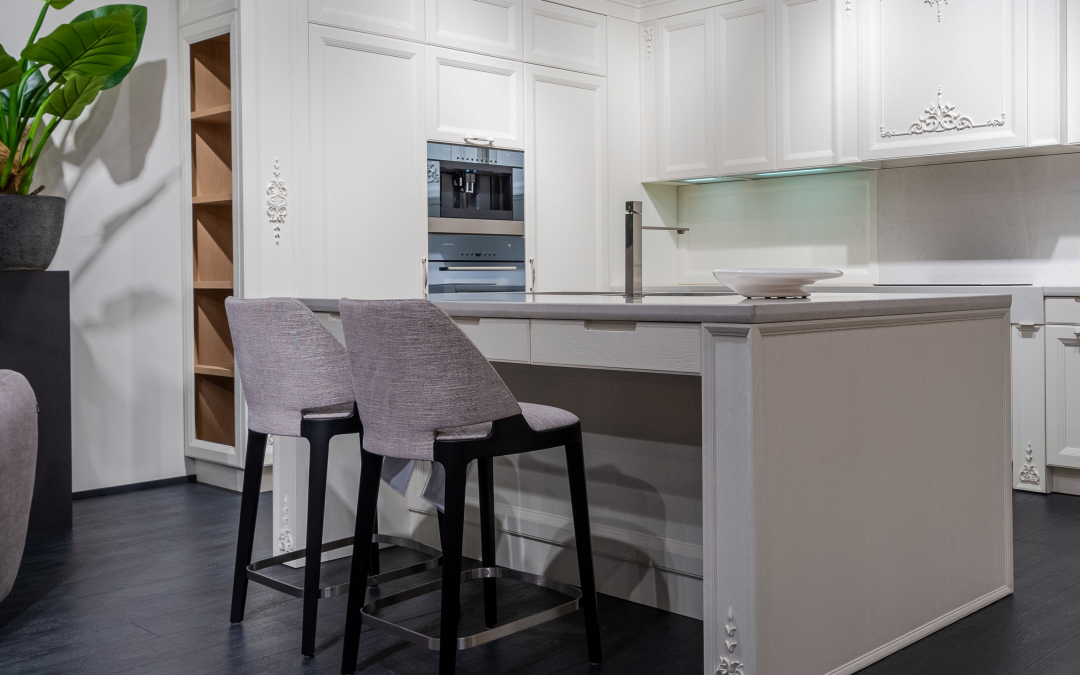
Meet the Bar Stool is a high-legged seating element specifically designed to accommodate elevated tables or work surfaces, such as kitchen islands, bar counters, cashier areas, and casual counters in commercial dining spaces.
Unlike standard dining chairs built for lower, relaxed seating, a bar stool promotes a semi-standing “perched” posture. This position keeps users eye-to-eye with standing companions, supporting flexible social interaction in communal and open-concept spaces. Spatially, bar stools feature a slim vertical profile to conserve floor space in high-traffic zones. Their durable builds use stable bases reinforced by horizontal stretchers that serve as footrests. This elevated, sturdy design supports both quick dining and counter-level work.
Standard Dimensions & Anatomy
Clearance between the stool seat and the underside of the counter should measure roughly 25–30 cm for proper ergonomics:
- Counter Height (60–68 cm): Fits standard residential kitchen islands with surface heights around 85–92 cm.
- Bar Height (70–76 cm): Fits commercial bar counters and cafe tables around 100–108 cm high.
- Extra Tall / Spectator Height (80–85 cm+): Fits tall custom commercial counters.
Key Features
- Footrest: Essential for counter seating. Proper foot placement prevents leg strain and numbness under the thighs. The standard distance from seat to footrest is 40–45 cm.
- Backless Seats: Compact designs slide completely out of sight beneath the counter surface.
- Low & High Backrests: Contoured backs deliver lumbar support during longer meals or work sessions.
- Mechanisms: Modern stools often incorporate 360-degree swivels or hydraulic height adjusters.
Matching stool height to counter dimensions, confirming footrest clearance, and selecting the right back style creates an efficient, comfortable seating setup.
